



 Story
Story
 Laura
Laura
 Mia
Mia
 Magda
Magda
 Luce
Luce
 Martina
 Mina
Mina
 Pearl district
 Irene
Irene
 Federica
 Frida
Frida
 Lucrezia
 Mirra
Mirra
 Ida
Ida
 Monica
 Isadora
 Unica
Unica
 Fedora
 Berenice



 Story
Story
 Vespucci
 Galileo
 Matteo
 Mattia
 Manfredi
 Brunelleschi
 Duccio
 By material
 Leather trolleys
 Hard case trolleys
 Fabric trolleys


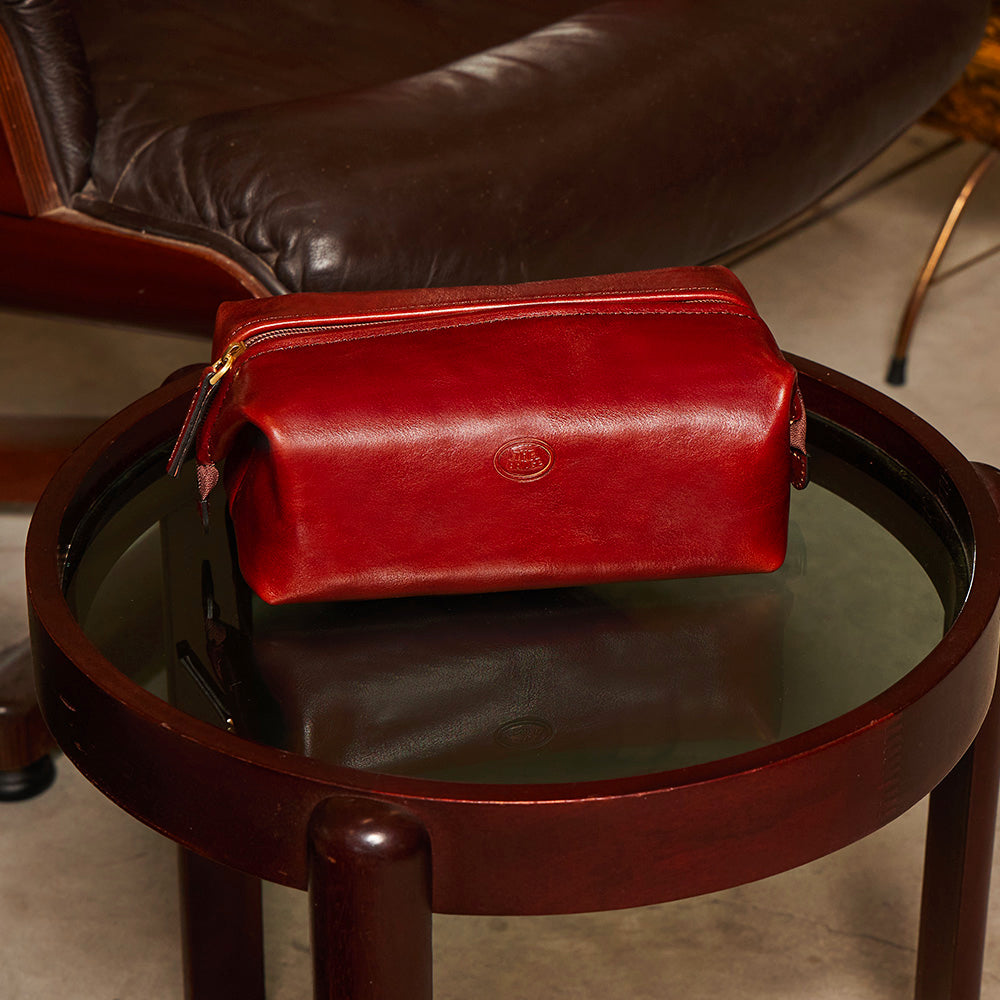

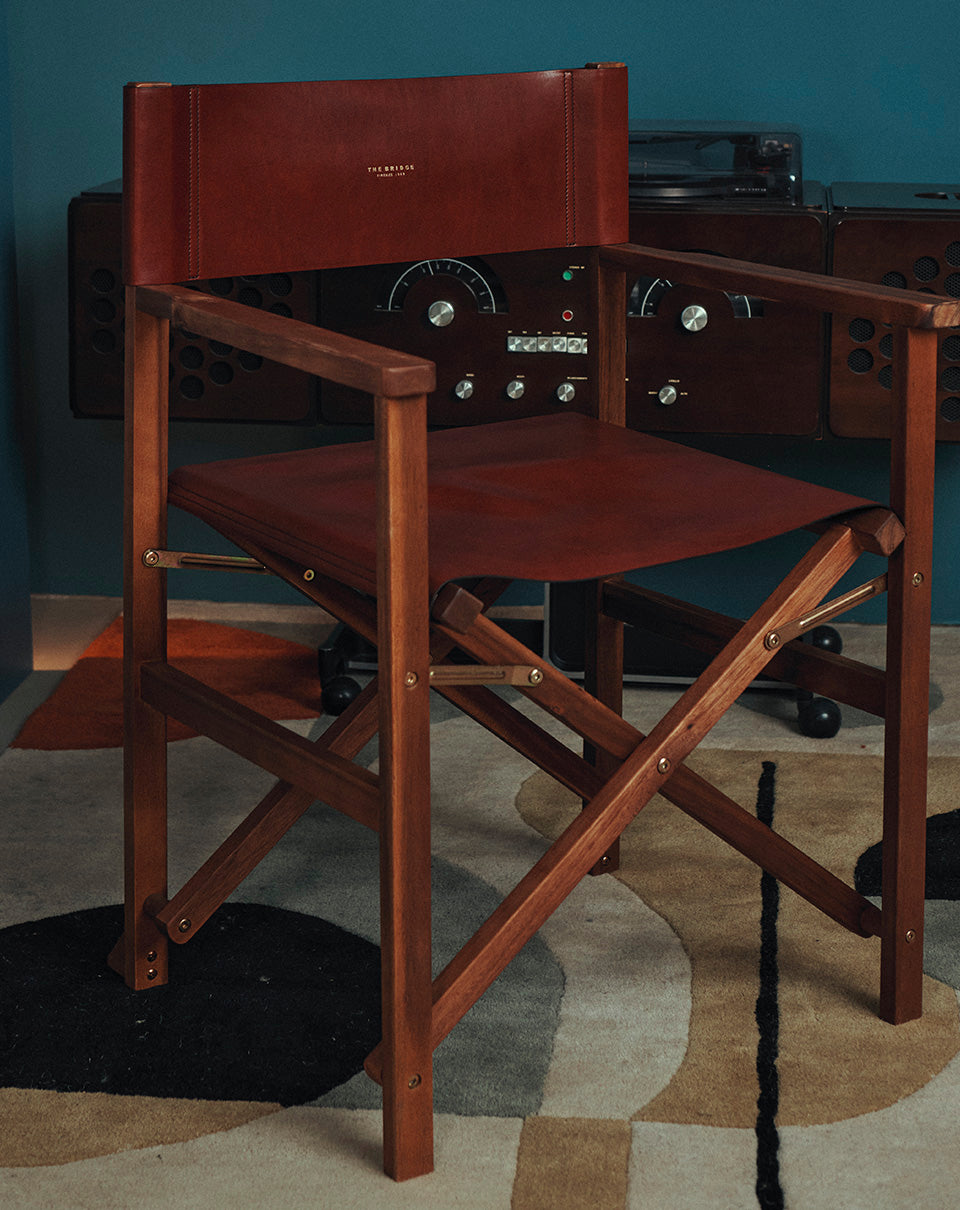


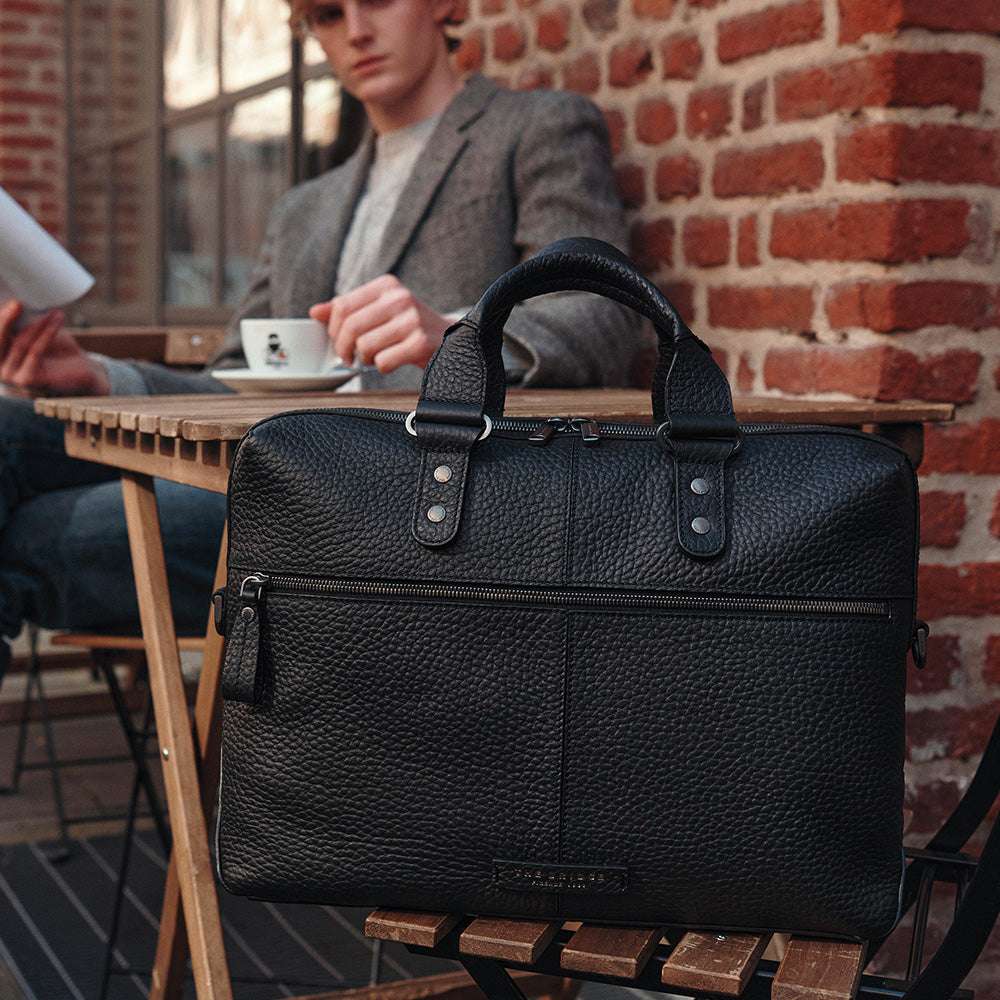
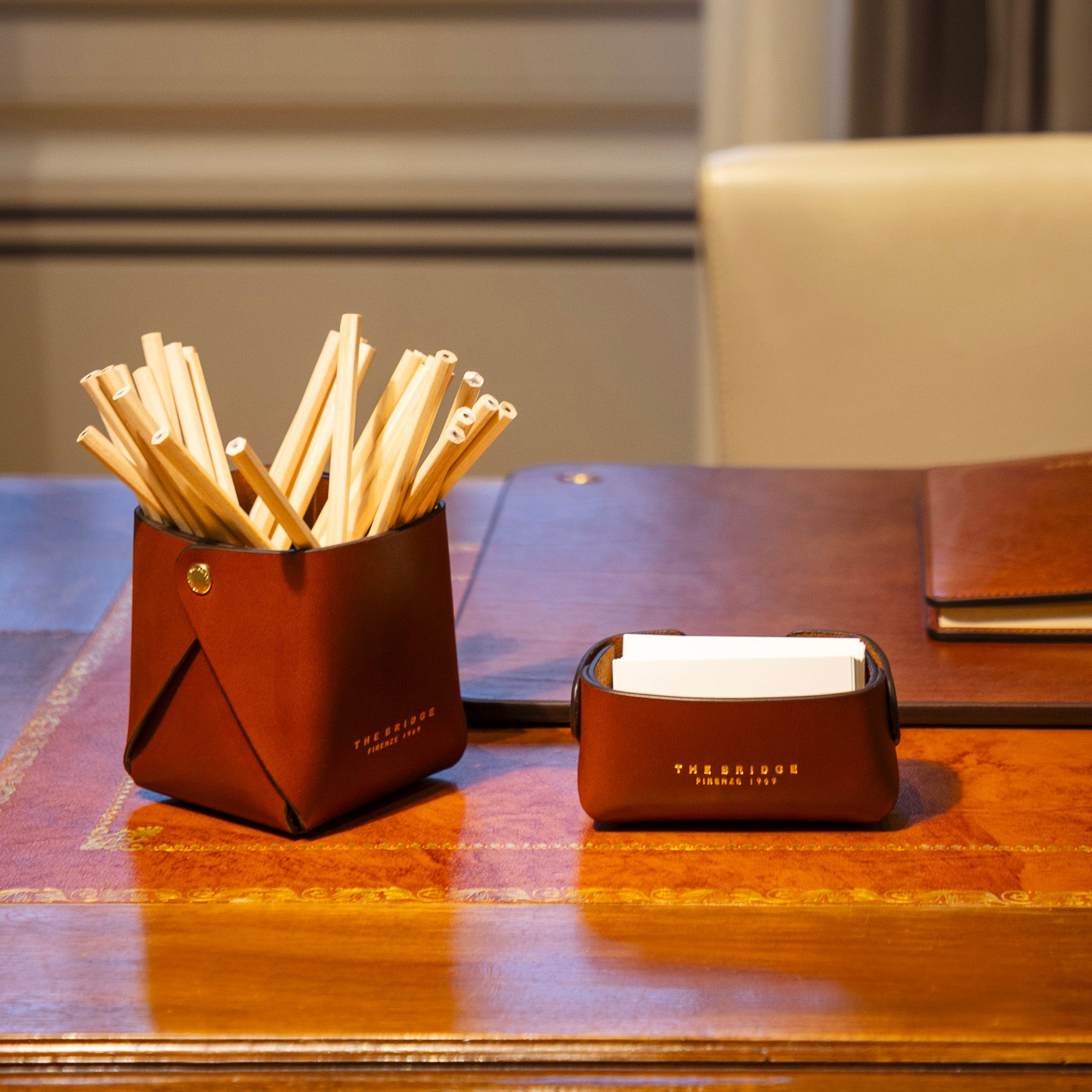
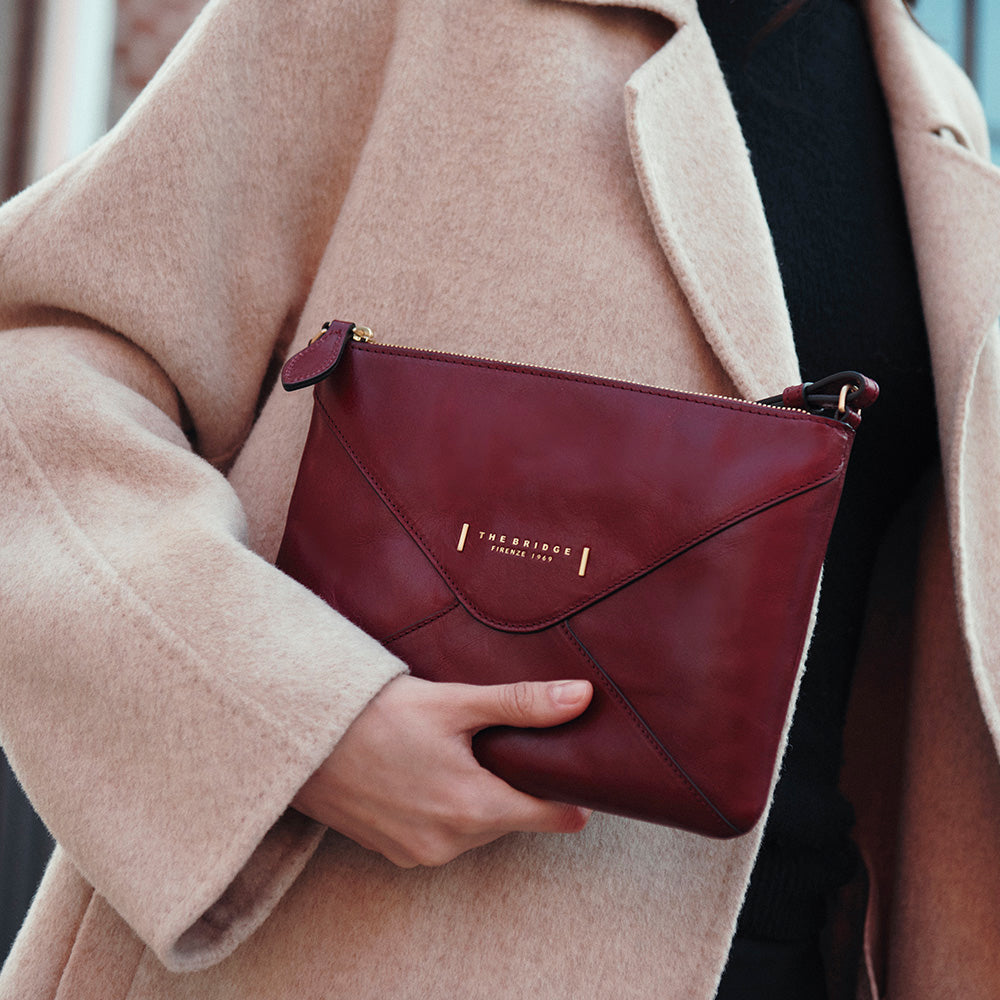

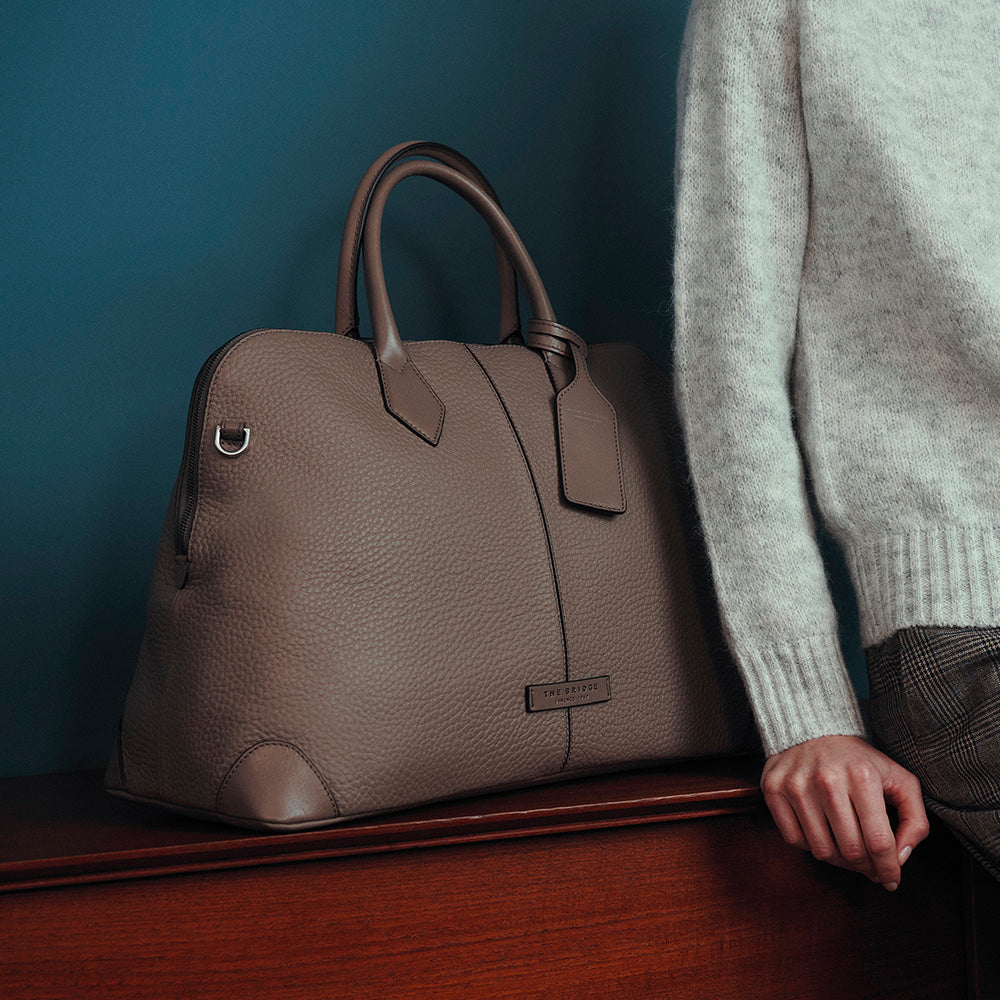


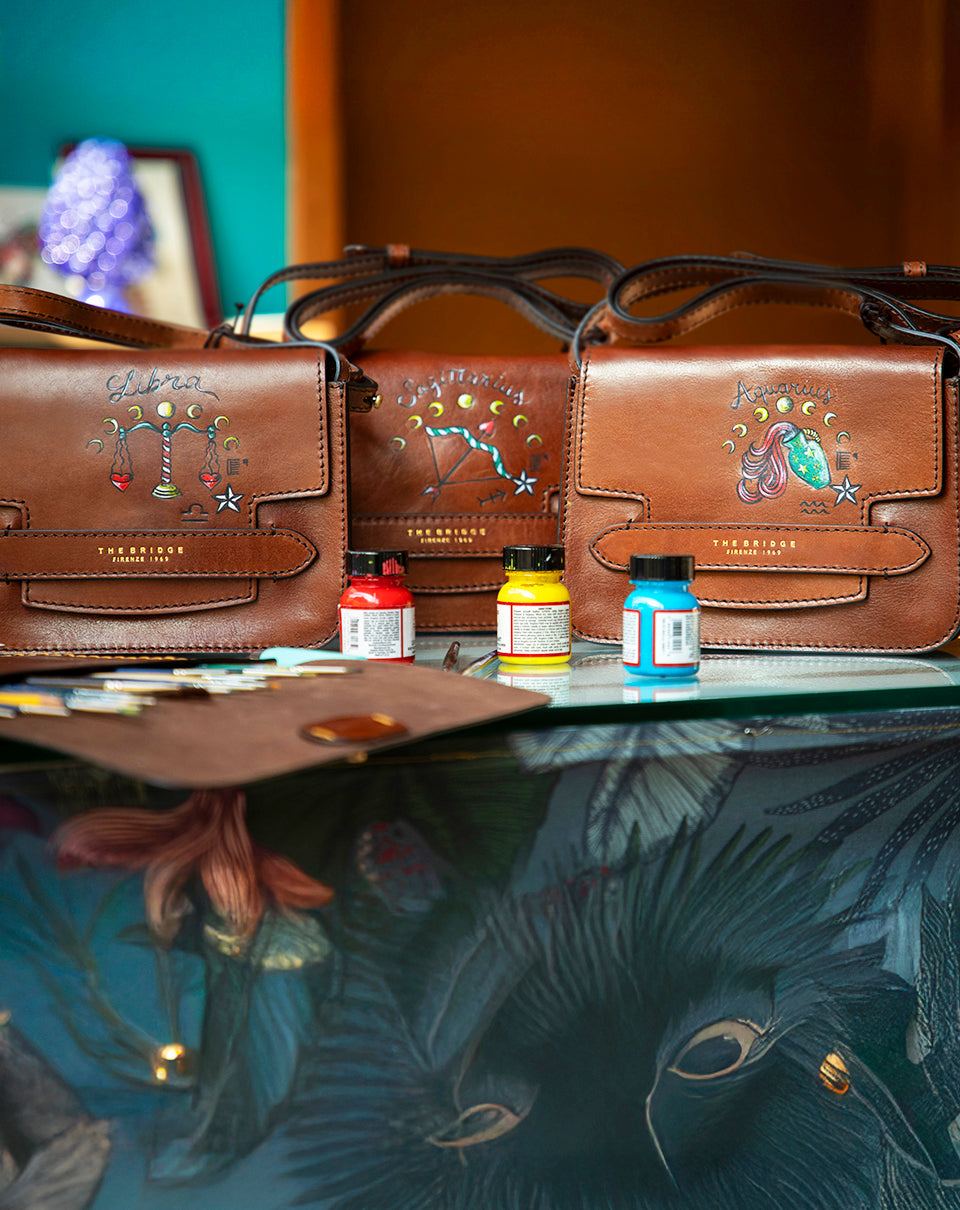
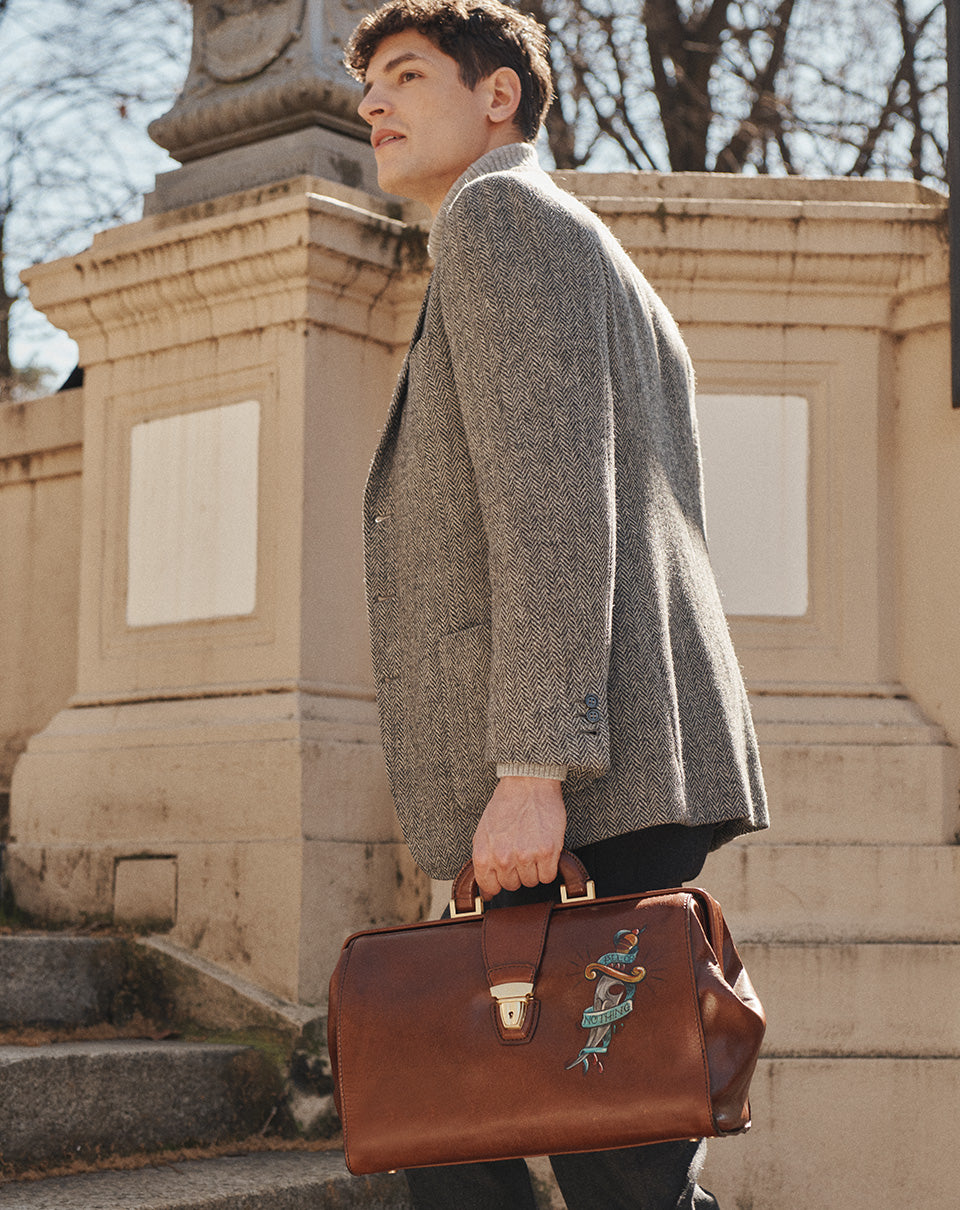

Vegetable tanning: tradition, sustainability and craftsmanship
In the heart of Tuscany, there is an ancient knowledge that transforms leather into something alive, warm, destined to evolve over time.
Vegetable tanned leather embodies a perfect balance between elegance, durability and respect for the environment.
For The Bridge, which has always preserved the essence of "made in Tuscany", this choice is a gesture of love towards authentic beauty: creating objects capable of crossing the years, bringing with them the history of those who wear and use them.
What does "vegetable tanning" mean?
Vegetable tanning is an ancient technique, a slow ritual in which raw leather is immersed in infusions of natural tannins obtained from barks, leaves, fruits and roots.
It is a process that does not force the material, but accompanies it: the leather breathes, is enriched with shades, welcomes light and time, transforming them into character.
The result is a leather that lives, that tells a story and that over the years takes on an increasingly refined appearance, marked by a beauty matured with grace.
The technical and aesthetic advantages
Compared to faster and more aggressive chemical treatments, vegetable tanning gives the leather:
• rich, natural shades, reminiscent of pigments derived directly from the earth;
• a living structure, which is transformed with light, use, daily gestures;
• superior durability, which rewards attention and care;
• a deep connection to artisan tradition, which does not limit itself to producing, but interprets the material.
The artisan tradition of The Bridge
In the heart of Tuscany, vegetable tanned leather is the soul of every The Bridge creation.
In the workshops of the Florentine district, The Bridge artisans transform natural materials into accessories that speak of passion, dedication and roots.
Every gesture, from the choice of the raw material to the slow drying in the air, is part of a knowledge that defies time.
No two leathers are ever identical: each one brings with it marks, delicate variations and shades that become even more fascinating over the years.
It is through this spontaneous evolution that the authentic value of Tuscan craftsmanship emerges.
The sustainability of the vegetable tanning process
Vegetable tanning combines beauty and responsibility in a harmonious balance.
The process uses only natural tannins and reduces the environmental impact compared to other tanning systems: less complex waste to manage, more transparency and no substances harmful to humans and the environment.
Choosing a vegetable-tanned product also means choosing durability: preferring an object that lasts over time is a sustainable gesture in itself.
Fewer replacements, less waste, more value.For The Bridge, sustainability is tangible and lived every day: a way of doing things that makes beauty not a luxury, but a conscious act.
Using vegetable-tanned materials therefore means sincerely telling the origin, timing and care of the production process.
It is an act of respect for those who choose a The Bridge accessory, and a tribute to conscious elegance that recognizes the value of tradition.
How to recognize and care for vegetable tanned leather
Hallmarks
Looking at a The Bridge accessory in vegetable tanned leather, you can recognize:
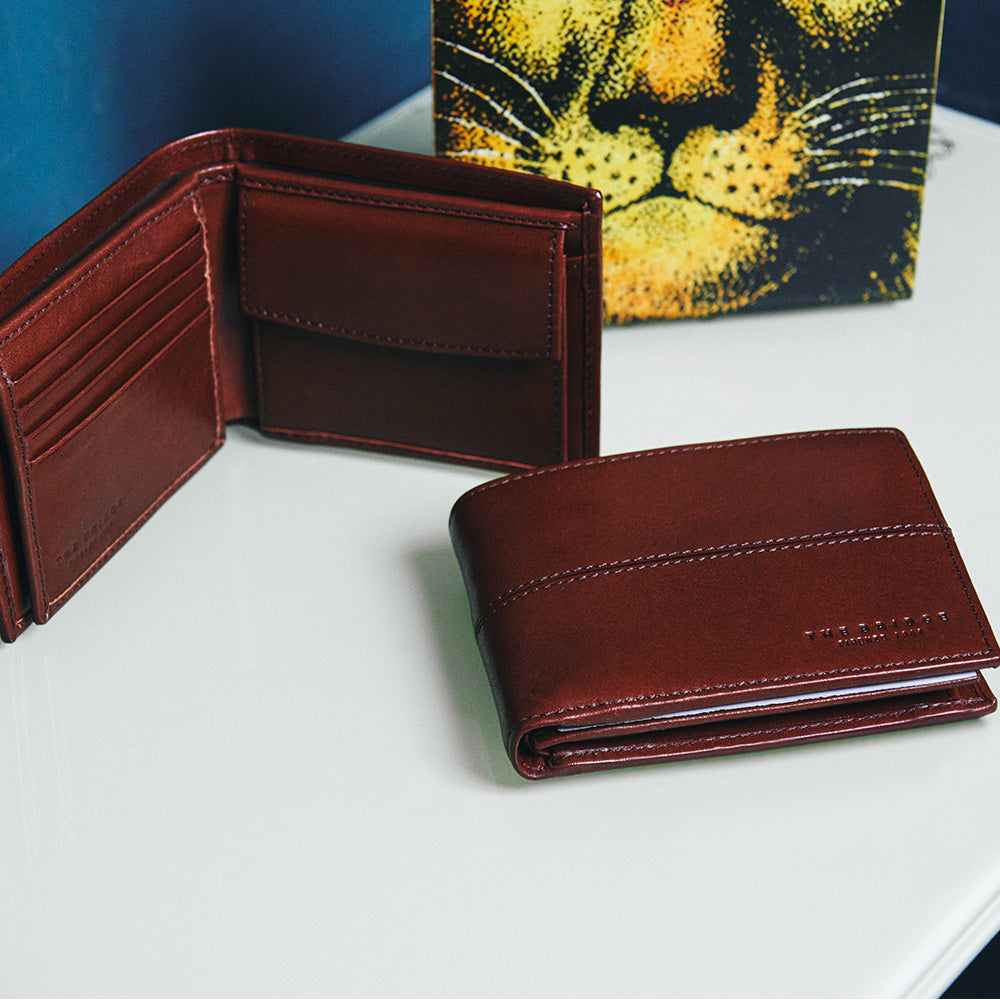
• a natural grain, rich in subtle variations;
• a color that is never uniform, alive and three-dimensional;
• a warm, authentic tactile feel;
• an aspect that, over the years, is enriched with new nuances and reflections, marked by use and your personal history (not to be confused with the so-called Repus, which in this resource we suggest treating with the right attention).
Recommended Care and Maintenance
To preserve the beauty of vegetable tanned leather:
• store the accessory in a dry and airy place;
• store it in dust bags made of breathable fabric;
• clean it with a soft cloth, avoiding aggressive detergents;
• apply a neutral leather conditioner when needed to nourish and protect the surface.
With a little care, this material not only stands the test of time, but is enriched with an increasingly personal charm. To find out how to take care of your The Bridge bags step by step, we recommend reading this article.
FAQ on vegetable tanning
1. What are the types of tanning?
There are two main types:
• chrome tanning, faster, industrial, with a uniform and water-resistant result;
• vegetable tanning, slow, natural and linked to centuries-old traditions.
2. What is the difference between chrome tanning and vegetable tanning?
The main difference lies in the materials and results.
Chrome tanning uses chemical agents that act quickly and produce uniform leathers, lighter and more resistant to water, but less natural to the touch.
Vegetable tanning, on the other hand, requires longer times and an entirely natural process based on vegetable tannins.
The result is a more authentic leather, with an unmistakable scent, which changes and improves with use, telling the story of the wearer.
It is a choice that combines tradition, sustainability and craftsmanship.
3. How is vegetable tanning carried out?
The vegetable tanning process is an art that requires time and skill.
After cleaning and preparing the raw hides, they are immersed in tanks containing solutions of natural tannins.
The leather remains immersed for weeks, gradually absorbing the plant substances that stabilize it and give it resistance and natural color.
This is followed by slow drying, in the air, and hand finishing, which enhances the nuances and unique texture.
4. What is vegetable tanning used for?
Vegetable tanning is used to transform raw leather into a durable, flexible and noble material, ideal for high-quality accessories.
In addition to guaranteeing resistance over time, this type of processing enhances the natural appearance of the leather, allowing it to acquire an inimitable charm with use.
It is a careful and sustainable choice, which honors the raw material and enhances ancient know-how rooted in patience, care and the slow passage of time.
Conclusion
For The Bridge, vegetable tanning is not just a technical choice, but an act of culture and responsibility.
Each accessory made with this leather holds a promise: to endure, to tell a story, and to accompany you over time.
Choosing a vegetable tanned The Bridge creation means embracing an object that lives with you and evolves alongside you.
There are no comments for this article yet.